Friday, 9 September 2016

Apple’s new iPhone 7 and iPhone 7 Plus to come with A10 Fusion 64 bit quad-core processor, new Black and Jet Black colours, AirPods instead 3.5 mm headphone jacks

Here is the new iPhone 7 from the house of Apple. Apple’s iPhone 7 launch going on in San Francisco and half the tech world is glued to the release. The new iPhone 7 was announced amidst great fanfare by Tim Cook by Apple CEO.
Here is what the new iPhone 7 will look like. iPhone 7 will come in two versions, iPhone and iPhone Plus. It will come in two new shades, Jet Black and Black in addition to the normal iPhone shades like Rose Gold. It will have a redesigned and reengineered home button. The new home button on iPhone 7 and iPhone 7 Plus is customisable and you can use it for quick actions, messages, notifications and more through Taptic Engine API. The new Home Button is similar to the Force Touch trackpad you use on your Mac PCs.
iPhone 7 and iPhone 7 Plus will be dust and water proof meeting the IP67 waterproofing standards.

Camera on iPhone 7

Apple has improved the camera on iPhone 7 tremendously. The new iPhone 7 will come with Quad-LED true tone flash. It will also bring a new feature called Flicker Sensor. iPhone 7’s photo sensor can perform hundred billion functions every time you take a photo. iPhone 7 will come with dual cameras with two 12MP lens. The first lens will be used for normal photos while the second one a telephoto zoom lens and will be used for zooming upto 10x .
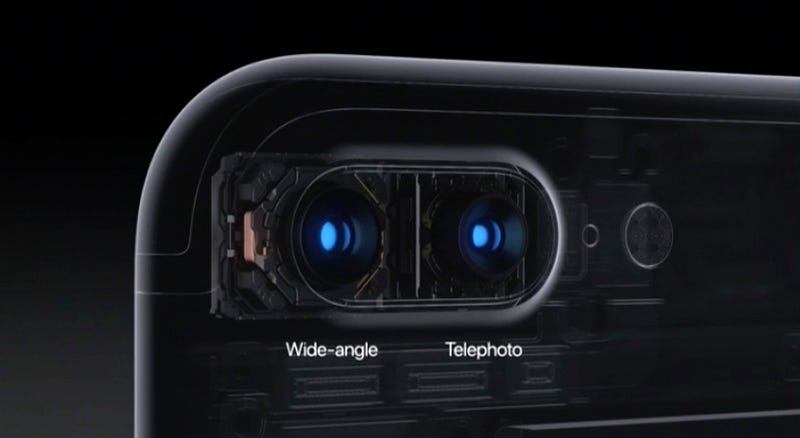
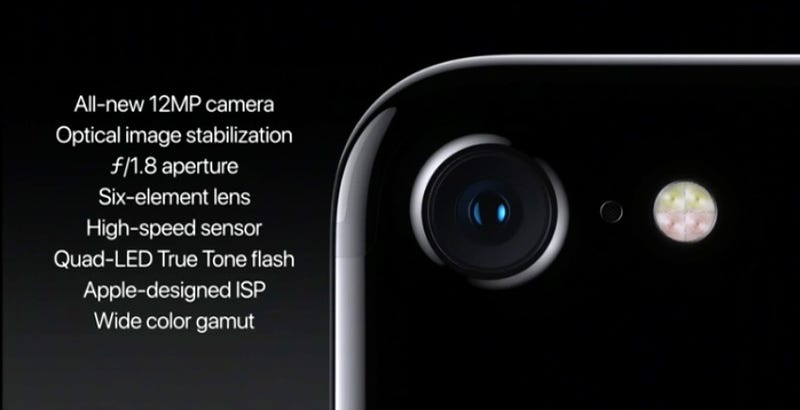
iPhone 7 released, comes in ‘Jet Black’ and Black versions with dual camera’s, No 3.5 mm headphone jacks
Both iPhone 7s will have a 7MP Facetime HD front camera for selfies. The front camera also comes with a feature called “wide colour capture” along with auto image stabilisation.
iPhone 7 released, comes in ‘Jet Black’ and Black versions with dual camera’s, No 3.5 mm headphone jacks

Display on iPhone 7

Apple has continued with the display size of iPhone 6s with iPhone 7 and iPhoen 7 Plus. However, it will be 25 percent brighter according to Apple. It will also have 3D touch like iPhone 6s

No 3.5 mm headphone jacks

As was rumoured, iPhone 7 and iPhone 7 Plus will not have 3.5 mm headphone slot. Instead, it will connect to the headphones through lightning connector. However, Apple will be shipping lightning to 3.5 mm connector adapter bundled with every iPhone 7.
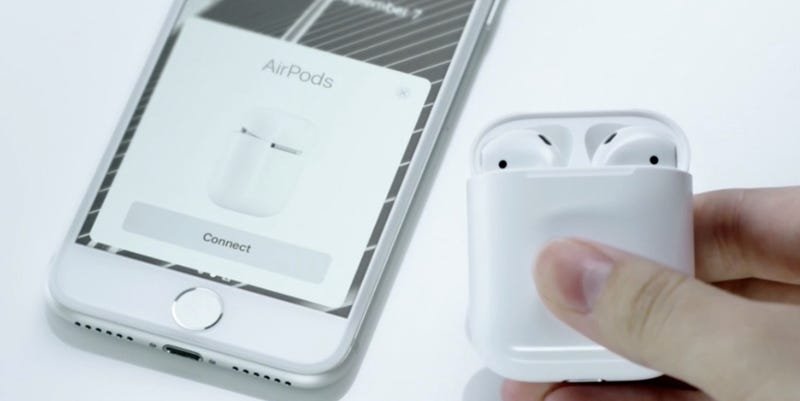
Apple also announced new Apple AirPods. Apple said that built-in sensors will detect when the AirPod is in your ear. The music will start playing once AirPod had detected your ear. Users can also use Siri to access the AirPod directly. Each AirPod will last for 5 hours on a single charge according to Apple. You can also use a single AirPod or use them both for a stereo setup. AirPod will be powered by a new chip called W1. Beats will be launching new set of AirPods called BeatsX.
iPhone 7 released, comes in ‘Jet Black’ and Black versions with dual camera’s, No 3.5 mm headphone jacks

Apple Pay

Apple is expanding its wallet, Apple Pay to all countries. It will also launch in Japan with a new NFC technology called FeliCa.

Under the Hood

iPhone 7 will come with a new chip called A10 Fusion. A10 Fusion is a 64 Bit Quad Core processor with 3.3 billion transistors. Out of the four cores, two cores will be running at lower power to save power and increase battery life. Apple said that the new A10 Fusion will be performing 50 percent better than the earlier A9 chip and three times faster than A8.
Apple said that its A10 Fusion is the most powerful smartphone processor in the world today and can run any game flawlessly. Apple displayed A10 Fusion’s power with a game called Broken Kingdom with 400 flying monkeys. A10 Fusion will give iPhone 7 and 7 Plus the longest battery life ever.
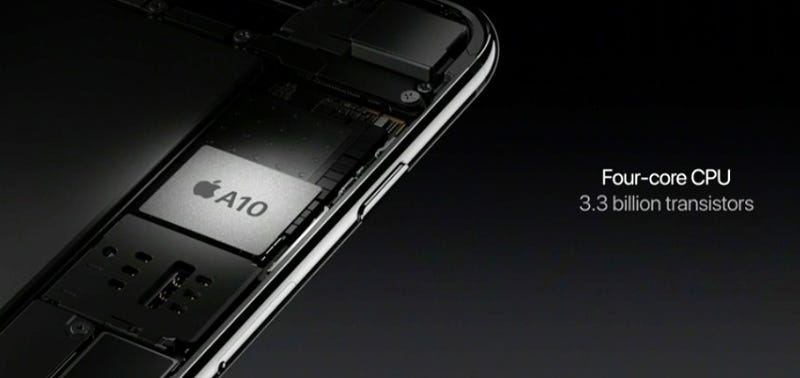
iPhone 7 released, comes in ‘Jet Black’ and Black versions with dual camera’s, No 3.5 mm headphone jacks
iPhone 7 will come with a new feature called LTE Advanced for connectivity with speeds up to 450 Mbps in addition to all the other iPhone features.

iPhone 7 Price

iPhone 7 will start at $649 for 32GB, the other options are 128GB and 256GB. While iPhone 7 Plus will start at $769 for 32GB version. iPhone 7 pre-orders will start on 9th September and will be available to buyers on 16th September in 28 countries around the world with 30 countries to be added a week later.
The new AirPods will ship at $159 and start shipping in October.

Saturday, 3 September 2016

Another Samsung’s flagship Galaxy Note 7 explodes causing the company to recall all sold Note 7s around the world for a fix

Samsung is in deep shit. Its flagship product, Galaxy Note 7 has been exploding non-stop around the world due to defective batteries, causing the world’s largest smartphone maker to announce a recall unprecedented in smartphone history.
We had recently reported that how a Samsung Galaxy Note 7 exploded in Korea while it was charging, making it the second incident of the device being exploded in less than a weeks’ time. The first report of a Samsung Galaxy Note 7 randomly exploding while charging in China appeared online on August 24.
Samsung confirmed that it was investigating the matter and said that, “Shipments of the Galaxy Note 7 are being delayed due to additional tests being conducted for product quality.”
The South Korean company added, “In response to questions on Galaxy Note7, we are conducting a thorough inspection. We will share the findings as soon as possible. Samsung is fully committed to providing the highest quality products to our consumers.”
However, it now looks like Samsung is likely to recall Galaxy Note 7 units shipped worldwide. “The most important thing is the safety of our customers and we don’t want to disappoint our loyal customers,” a Samsung official who spoke on the condition of anonymity told Yonhap News Agency. The problem has been narrowed down to the Galaxy Note 7’s internal [non-removable] 3,500 mAh battery said the anonymous Samsung spokesman.
“Products installed with the problematic battery account for less than 0.1 percent of the entire volume sold. The problem can be simply resolved by changing the battery, but we’ll come up with convincing measures for our consumers,” stated the official.
The development comes a few days before rival Apple is set to unveil its new iPhone 7 and 7 Plus next week in San Francisco, and will surely weaken Samsung’s position in the market.
If the report of a worldwide recall of Galaxy Note 7 holds true, the company doesn’t plan to announce the results of its investigation soon, as it is in talks with partners in the U.S. on the issue.
“Global discussions are under way about matters such as how to deal with products delivered to dealers. Results of the investigation and relevant countermeasures will be made public this weekend or early next week at the latest,” the official added.
“The decision will be made in consideration of maximum consumer benefit,” Samsung official noted.
The Samsung Galaxy Note 7 had gone on sale August 19th in more than 10 countries worldwide to critical acclaim.

Facebook’s first satellite destroyed in SpaceX test rocket explosion

AMOS-6 satellite, the first from Facebook’s Internet.org initiative and part of Mark Zuckerberg’s future vision for delivering the internet in Sub-Saharan Africa, went up in flames, when a SpaceX Falcon 9 rocket exploded on the launch pad at Cape Canaveral in Florida during a test, destroying it and its payload. The Falcon 9 rocket costs about $60 million, and Facebook’s AMOS-6 cost about$200 million.
Both the rocket and the satellite were destroyed in the explosion, which resulted from an “anomaly” with the launch pad and not the rocket itself. However, there were no injuries, SpaceX said in a statement.
“SpaceX can confirm that in preparation for today’s standard pre-launch static fire test, there was an anomaly on the pad, resulting in the loss of the vehicle and its payload,” SpaceX said in a statement about an hour after the explosion. “Per standard procedures, the pad was clear and there were no injuries.”
SpaceX was conducting a test firing of the unmanned rocket when the blast occurred, shaking buildings several miles away. Eyewitnesses reported multiple explosions in the aftermath.
The rocket was set to launch on Saturday, September 3, 2016. Its mission was to deliver an AMOS-6 communication satellite belonging to Facebook. The AMOS-6 satellite, which reportedly was set to be used to provide internet connectivity to rural parts of sub-Saharan Africa, was on board the Falcon 9 rocket at the time of the test and was destroyed in the explosion.
The loss of the satellite is expected to delay the rollout of an important component of Facebook’s ambitious plan to connect every person on the planet to the Internet. “We are disappointed by the loss but remain committed to our mission of connecting people to the Internet around the world,” a Facebook spokesperson was quoted as saying.
“As I’m here in Africa, I’m deeply disappointed to hear that SpaceX’s launch failure destroyed our satellite that would have provided connectivity to so many entrepreneurs and everyone else across the continent,” Zuckerberg said in a statement posted to Facebook. He had scheduled an Africa trip this week to coincide with the satellite’s launch. On Friday, Zuckerberg met with Nigeria’s president Muhammadu Buhari and also visited Kenya.
However, pointing other efforts in the works to spread Internet connectivity around the globe, such as a fleet of Facebook-built drones, Zuckerberg said, “Fortunately, we have developed other technologies like Aquila that will connect people as well. We remain committed to our mission of connecting everyone, and we will keep working until everyone has the opportunities this satellite would have provided.”
The satellite’s destruction is just the latest setback for Internet.org, Zuckerberg’s signature project to bring connectivity to remote places around the world that do not have it. In October, Facebook announced it had teamed with French satellite company Eutelsat to launch the AMOS-6 satellite in a deal valued at $95 million for a five-year lease on the Ka-band communication array.

Google cancels plan for smartphone with interchangeable parts

Project Ara, which was the dream project and an innovative attempt of Alphabet Inc.’s Google to develop modular smartphone with interchangeable components like cameras, batteries and speakers, has been shelved. However, the decision comes as a surprise especially since the company at its developer conference in May that it would begin shipping Project Ara devices to developers this autumn and a consumer release for 2017.
Google has decided not to release the product itself, but it may work with partners to bring Project Ara’s technology to market, possibly through licensing agreements, according to Reuters. The company regularly partners with device makers to build its Nexus smartphones and tablets, so this wouldn’t be out of the ordinary for Google.
“Most people do not upgrade their phone to get the next processor — they do not even know what that is — but they do it to get the next best camera, or fingerprint sensor, or better speaker, all in one device,” Rafa Camargo, Google’s engineering lead, demonstrated a functional developer version of an Ara phone told Digital Trends in an interview this year. “[We developed] a new set of technologies to create a more seamless modular experience for users …”
For those unfamiliar, Project Ara was initially developed by the company’s Advanced Technology and Projects group, which Google held onto after selling Motorola Mobility to Lenovo in 2014. Project Ara was first announced by Motorola almost three years ago.
Project Ara was designed to allow users to switch key smartphone parts when they’re broken or to upgrade them when better segments go along. This would allow a user to assemble a phone like building blocks. With this modular smartphone designing scheme, Google aimed at creating a phone can be customized with an extra camera, battery, camera, speakers and other elements, depending on what you require from your device. This Project Ara was reported to unify Google’s hardware segment, which ranges from Chromebook Laptops to Nexus Mobiles.
Modular smartphones are indeed an exciting concept to bring to the market for their potential to prolong the lifespan of a device and reduce electronic waste, which would definitely keep consumers interested. However, modular smartphones are bulkier and costlier to produce than the regular ones, making them a risky business move.
Last year, Google shelved plans to sell the modular smartphone in Puerto Rico with Latin American carriers.